Building Summers of Opportunity
Design and Implement Engaging Summer Learning Programs
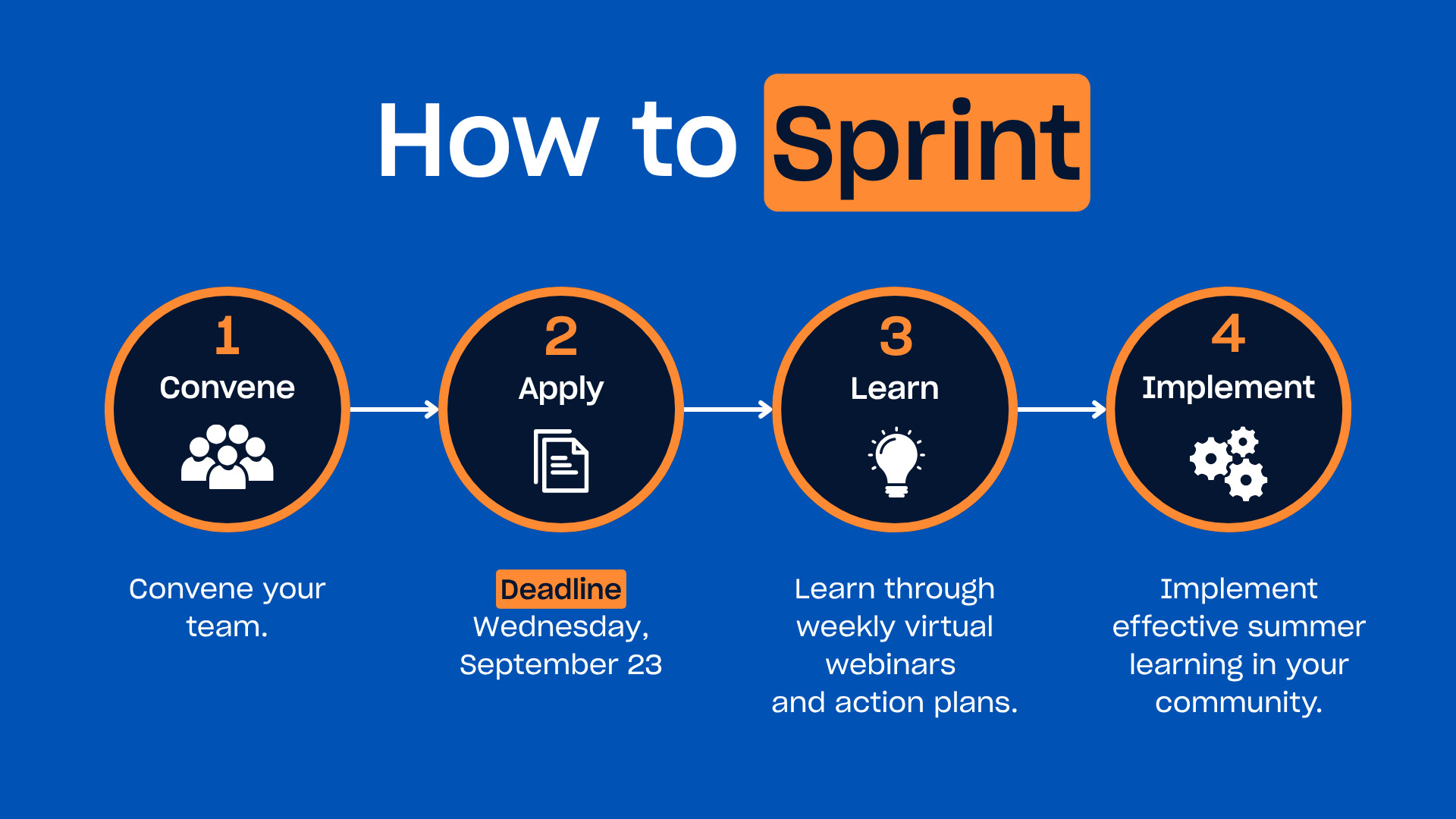
Results for America invites teams from local governments, education agencies and municipalities to apply for this 5-session virtual learning opportunity. This “Solutions Sprint” is designed for teams committed to advancing evidence-based summer learning in their schools, districts and cities.
Offered in partnership with The Learning Agenda and grounded in research from EdResearch for Action, this opportunity will provide selected teams with expert guidance on how to design, fund and implement evidence-based summer learning programs. Participants will learn from local governments, leading local education agencies (LEAs), nonprofits and community partners, national experts and researchers – gaining practical insights, proven strategies, and connections with peers at every stage of program development.
Key Dates and Details
- Applications Open: Wednesday, August 26, 2026
- Informational Webinar: Tuesday, September 15, 2026 from 1:00 p.m. to 2:00 p.m. ET
- Application Deadline: Friday, October 2, 2026 by 11:59 p.m. ET
- Sprint Kickoff: Thursday, October 22, 2026
- Duration: Five sessions; Thursdays from October 22 to November 19 from 1:00 p.m. to 2:30 p.m. ET.
- Location: Virtual workshops, coaching and cohort discussions on Zoom.
Sprint Goals and Objectives
Participating teams will work through a 5-session online learning curriculum with a cohort of peers from local education agencies and/or city agencies across the nation. By the end of the Sprint, participants will:
- Understand the evidence-base and eight key design principles of an effective summer learning program and develop an action plan for launching or improving a summer learning program.
- Understand how summer learning programs can reduce “summer slide” and advance student achievement goals.
- Explore best practices for summer planning, program design, staffing and student engagement.
- Identify funding sources for summer learning programs and understand and be able to apply evidence-based spending strategies to increase the impact of investments.
- Consider opportunities for community partnerships and cross-sector coordination.
- Learn from and build relationships with peers across the nation who are implementing effective academic summer learning programs.
At the end of the Sprint, participants will have created an action plan that may include:
- Ideas and strategies for:
- Program vision (purpose, goals, target students)
- Program scope and scale
- Special features
- Evidence-aligned priorities, strategies and continuous improvement targets for:
- Planning team and processes
- Program content (academic and enrichment curriculum, partners)
- Staffing and professional development
- Student/youth recruitment and engagement
- Program climate and culture
- A concrete timeline and next steps for implementation.
Who Should Apply
Building Summers of Opportunity is designed for teams from local governments who are interested in implementing or expanding evidence-based summer learning in their schools, districts and communities. The Sprint is particularly well-designed for organizations designing elementary and middle school level summer learning programs; however, organizations interested in designing high school level summer learning programs may still apply.
The strongest applications will include teams that bring together a diverse group of key stakeholders to maximize the opportunity and establish a foundation for long-term success.
Participating members of the team should include, but are not limited to, the following leaders and staff:
- Required, at least two participants from:
- Local governments, municipalities and/or local education agencies with oversight over the agency’s summer learning program; AND
- Government and/or community-based organizations supporting the summer learning program.
- Local government and organization examples
- School districts/schools
- Public charter schools/networks
- Mayor’s Office
- Youth and Family Services Department
- Department of Youth and Community Development
- Parks and Recreation Department
- Library systems
- Juvenile Justice
- Workforce Development/Economic Development
- Housing Authority
- Local government and organization examples
- Strongly Recommended:
- Citywide coordinating agency and/or Out-of-school time (OST) intermediary organizations coordinating local summer learning systems
- Staff members who oversee federal/state/county/local funding programs and/or philanthropic partnerships
- Recommended:
- District/school leaders, educators, union representatives (as appropriate)
- Youth Services Director/Manager/Coordinator
- Director of Expanded Learning (or similar)
- Teaching and Learning Directors, Curriculum Leads (or similar)
- Family/community engagement teams
- Communication leads
- School board members
- Staff members who oversee policies, practices, and content of an RFP/NOFO and/or contract to strengthen the role that evidence plays (e.g., Budget Officer, Grants/Contracts Manager, etc.)
- Local philanthropy
- Community-based partners, advocacy organizations and/or enrichment providers
Why Summer Learning? Why Now?
Rigorous research has shown that academic summer learning programs can help prevent “summer slide,” close opportunity gaps and accelerate learning for a wide range of students. But the content and structure of the program make a difference in its effectiveness.
Summer learning programs are most effective at improving academic outcomes when they:
- Last at least five weeks and include at least three hours of academic instruction per day.
- Pair class sizes of 15 or fewer students with certified teachers with content knowledge and grade level experience aligned to the class.
- Use high-quality instructional materials aligned with classroom content.
- Include engaging enrichment activities, taught by instructors with content expertise, alongside academics.
Extensive research also points to the importance of summer learning in supporting the well-being of young people. Youth in under-resourced communities tend to have less access to enriching summer opportunities, compounding the effects of summer learning loss and widening the achievement gap. A 26-year longitudinal study found that young people who participated in summer and afterschool programming became strong learners, earners and leaders, more likely to graduate, pursue higher education, earn higher incomes and stay engaged in their communities.
Go deeper: Explore summer learning resources on Results for America’s Economic Mobility Catalog, including a Q&A with two national summer learning experts and a strategy overview of best practices for implementing an academic summer learning program.
A successful model in Tuscaloosa: Read a case study of how Tuscaloosa City Schools (AL) implemented an academic summer learning program that helped protect against summer slide for 60% of their participating students in reading and 48% in math in 2021. These gains motivated Tuscaloosa City Schools to continue the program despite the end of federal recovery funding and a failed tax referendum that would have provided additional funding. In 2025, over 1,800 students participated in the program, with 63% of K-3 students demonstrating overall growth between pre- and post-summer learning assessments. Teacher feedback also confirmed that summer learning improved readiness for the new school year.
In Tuscaloosa, Alabama, students who consistently attended a summer learning program in 2021 retained skills better than students who did not regularly attend.
About the Facilitators
Weekly sessions will be designed and led by:
- Results for America, a non-profit organization that helps government leaders find, fund and implement solutions that work to accelerate upward economic mobility and improve lives. Over the last several years, Results for America has successfully run various Solutions Sprints, supporting over 250 jurisdictions in implementing evidence-based solutions and benchmarking their progress towards better outcomes for their communities.
- The Learning Agenda, a national team of consultants with expertise in summer and expanded learning and innovative schools and program design. The Learning Agenda is dedicated to ensuring that educators are well-equipped to lead effective systems, schools, and programs that help kids thrive in adulthood, and infuses evidence-based practices into their approach.
For questions, email [email protected].