How to Launch a Transitional Jobs Program That Works
Every year, more than 600,000 people return to their communities from state and federal prisons while millions more are impacted by justice systems at the local level. One of the most important supports that justice-impacted people need and want access to upon returning home is the opportunity to work.
What opportunities do justice-impacted people in your community have to connect with paid work opportunities immediately upon returning home?
What would the impact in your community be if those returning home from incarceration had the opportunity to find a quality job and build a career?
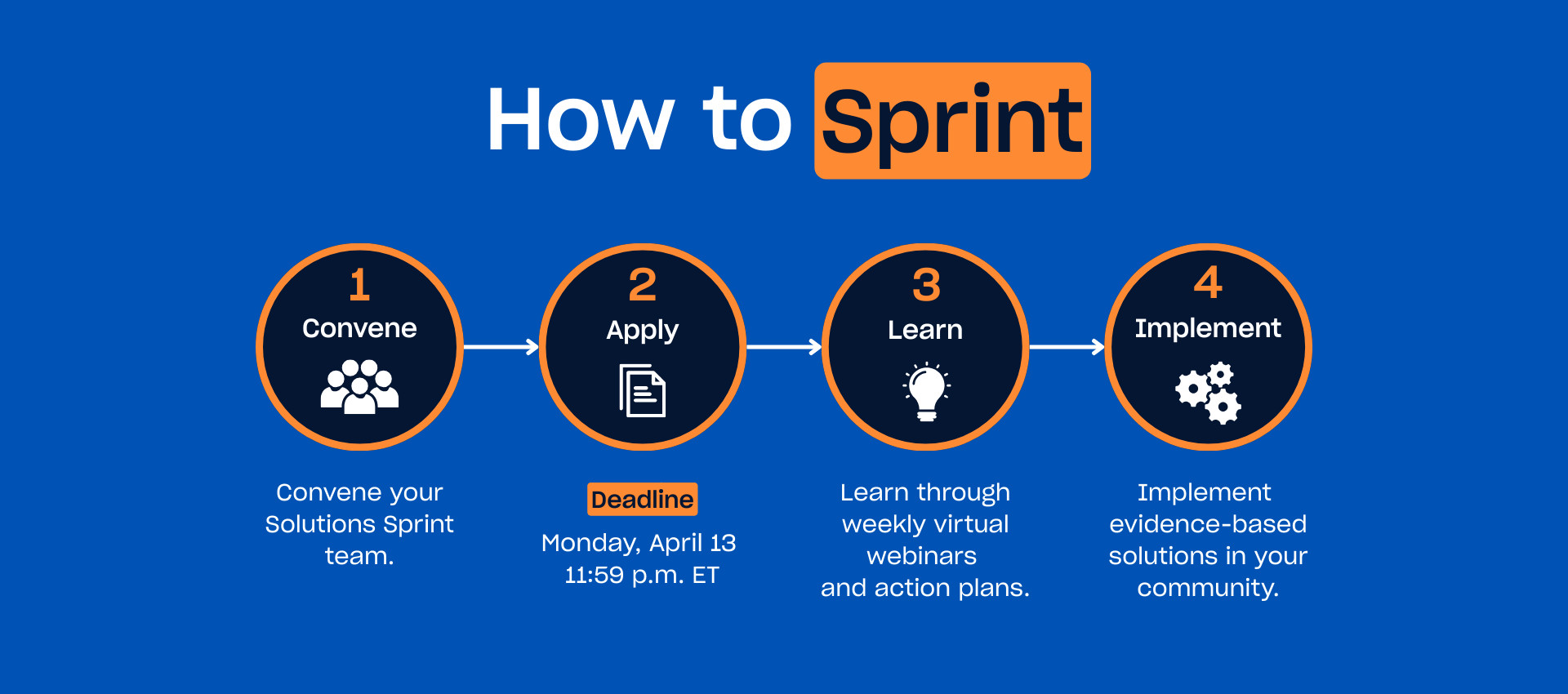
Results for America and the Center for Employment Opportunities invite local and state teams to apply for the Connecting Talent to Opportunity: How to Launch a Transitional Jobs Program that Works – a free 8-session virtual learning opportunity (called a Solutions Sprint) to advance implementation of evidence-based transitional jobs programs for justice-impacted individuals and those returning home from incarceration.
Selected teams will learn with experts and peer jurisdictions advancing transitional jobs programs. The Solutions Sprint empowers jurisdictions to build a diverse, cross-sector coalition of government agencies, employers, and service providers working together to improve public safety outcomes by ensuring everyone has a fair chance at jobs.
Key Dates
- Application Opens: Monday, March 16, 2026
- Informational Webinar: Wednesday, April 1, 1:00- 2:00PM ET
- Application Deadline: Monday, April 13, 2026
- Sprint Kickoff: Wednesday, May 20, 2026
- Duration of the Sprint: 8 weekly Zoom sessions, Wednesdays from May – July (90 mins each)
What You'll Gain
State and local jurisdictional teams will join a weekly virtual learning series where participants will have the opportunity to:
- Learn directly from experts, practitioners and peers working in jurisdictions that have implemented transitional jobs programs for justice-impacted groups, including the leaders that have invested, provided oversight, and actually run a paid training opportunity within their organization.
- Obtain evidence-based guidance for designing and implementing a transitional jobs program that meets the needs of your community.
- Participate in built-in opportunities to strengthen relationships within and across teams and form a coalition of diverse government and community leaders, recognizing broad-based partnership is needed to effectively implement transitional jobs programs.
- Develop an action plan that outlines steps your team will take to implement a transitional jobs program, including identifying and securing funding, program design in alignment with evidence-based best practices, defining eligibility criteria, employment pathways, and developing metrics for evaluation and continuous improvement.
- Use state and local funding streams and strengthen grantmaking, procurement, and contracting practices to align and shift public dollars toward evidence-based transitional jobs programs.
What You'll Learn
By the end of the Sprint, participants and teams will be able to:
- Understand how a transitional jobs program can advance workforce, reentry, and economic mobility goals in your jurisdiction or organization, including how these programs are most effective when they provide income support to participants.
- Understand the key design features of an effective, evidence-based transitional jobs program and align with your local goals and capacity.
- Identify viable local, state, and federal funding opportunities for transitional jobs programs, and learn best practices for engaging government and private partners.
- Develop a strategy for building and managing strong government and employer partnerships to create work opportunities and sustain funding.
- Design complementary programming and supportive services that strengthen participant outcomes and integrate seamlessly with the work experience.
- Develop an implementation plan for launching and managing a transitional jobs program, including compliance, administration, and capacity planning.
- Define success metrics and understand how to apply best practices in measurement and evaluation to assess participant and program outcomes and drive continuous improvement.
Who Should Apply
This Solutions Sprint opportunity is designed for community-based organizations and local or state government teams interested in implementing or expanding transitional jobs programs for justice-impacted individuals and those returning home from incarceration. Applicants are encouraged to apply as part of a broader coalition that brings together key stakeholders.
Not sure if you qualify? Reach out to our team and we can answer any questions you have.
Participating members of the team should include, but are not limited to, the following leaders and staff:
- Required:
- Community- based organizations that can house and operate a transitional jobs program or enhance a current program; AND
- State and/or local government official(s)
- Local Government Examples
- City Council, Mayor’s Office, County Commission, City/County Manager, State Representative, Local Workforce Development Board, American Job Center Representative, Local SNAP/TANF Agency, Local Jails/Public Safety Agency
- State Government Examples
- State Workforce Board Representative/State Workforce Agency (WIOA), Human Services Agency (TANF/SNAP E&T), State Corrections/Community Supervision Agency
- Local Government Examples
- Strongly Recommended:
- Representative(s) from justice-impacted community
- Program evaluation partner (e.g. academic or research institutions)
- Recommended:
- Potential referral partners (parole/probation office, food bank, corrections counselors, etc.)
- Transitional jobs worksite partner, including social enterprises, public agencies with an employment needs and workforce development interest (i.e. state and local departments of transportation, public works agencies, and parks and recreation departments), and private employers needing staff support or skills training pathways (landscaping, warehousing, construction)
- Local service providers (reentry-focused community-based organizations, housing organizations, wraparound services, etc)
Participation Requirements
To ensure a meaningful and impactful Sprint experience, teams ultimately selected to participate are expected to demonstrate the following in their application:
- Interest and Commitment: Participating teams should demonstrate a clear interest and commitment to implementing a transitional jobs program in their community. This can include existing progress or goals such as:
- Establishing or expanding a transitional jobs-focused coalition that includes community organizations, state or local government agencies, and community employer partners
- Conducting research on transitional jobs program models, consulting with experts, or attending educational events
- Gathering data on the workforce needs of justice-impacted communities in your area
- Researching, allocating or securing government funding to support the creation of transitional jobs programs
- Sustaining or expanding an existing transitional jobs program to expand reach, eligibility, or into new service areas.
- Active Participation: A majority of the team (3-5 members) are able to fully engage in the Sprint. This includes attending all sessions, engaging in group discussions, and completing assignments.
- Long-Term Investment: Committed to achieving the goals of the Sprint, both during and after its completion.
- Maximize Opportunity, Minimize Injustice: Committed to advancing more fair and effective workforce outcomes by addressing racial, economic and health disparities through transitional jobs programs.
- Person-Centered Approach: Dedicated to centering directly impacted individuals in the design, implementation, and evaluation of transitional jobs programs.
Sprint Facilitator
Weekly sessions will be designed and led by the Center for Employment Opportunities (CEO). CEO provides immediate and comprehensive employment services exclusively to individuals released from incarceration. Operating in 31 sites across twelve states, CEO is dedicated to expanding access to employment and advancing social and economic mobility for justice-impacted job seekers. Its program model offers immediate paid transitional work, advanced training, case management, supportive services, full-time job placement, and ongoing career support to help participants remain connected to the labor force.
CEO has supported more than 34,000 placements into full-time employment. Guided by a Theory of Change that prioritizes support during the critical post-release period, CEO aims to reduce reincarceration and promote long-term stability.
Why advance transitional jobs programs?
The Challenge
People who are returning to their communities after incarceration are tremendously motivated to get their lives back on track but face immediate barriers to work, including a lack of work experience, stigma around their conviction, or a long period of prior incarceration. It is important to connect these individuals with paid work to provide stability, leadership opportunities, and credentialing.
A national study from the Prison Policy Institute in 2018 found that formerly incarcerated people are nearly five times more likely to be unemployed than somebody who does not have contact with the justice system.
The Solution
Transitional job programs provide immediate income and a source of paid work experience. Those who are returning to their communities that participate in evidence-based transitional jobs programs like the Center for Employment Opportunities can mitigate barriers to employment and build their job searching skills to achieve their goal of finding and maintaining full-time employment.
Read more about the evidence in support of transitional jobs programs in the Economic Mobility Catalog.
Nobody gave me this job. I showed up, I did the work, and I earned it. This is just the start for me. I’ve got bigger goals now. But for the first time in a long time, I can see a future again.
Ron, CEO Columbus ParticipantAt Center for Employment Opportunities (CEO), the work is proven to have strong outcomes for justice-impacted individuals and our communities.
Individuals who enroll in the CEO program gain immediate access to paid jobs, often going home with money in their pocket within the same week of their enrollment. By pairing these paid transitional work opportunities with personalized job search support, our participants are able to achieve their goal of finding full-time jobs in the community.
Read Ron’s story of overcoming barriers including a 2-year job search before he was connected with stable full-time employment via the CEO program. You can also read more success stories from CEO participants on their website.
Questions?
Reach out to our team and we’ll get back to you as soon as possible.