Summer Learning that Works:
Design, Fund and Implement an Academic Summer Learning Program that Helps Students Learn & Thrive
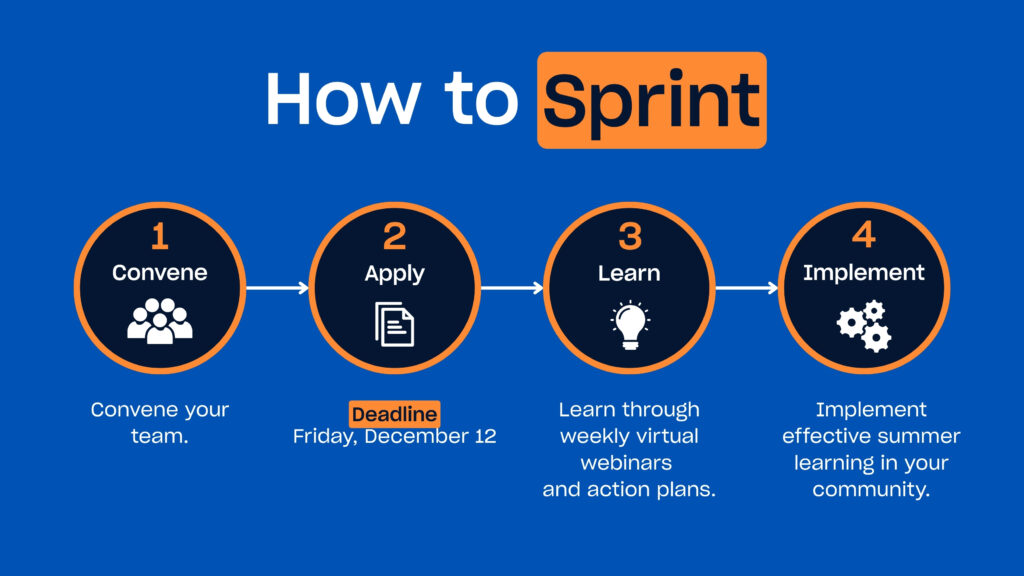
Results for America invites teams from local education agencies (LEAs) to apply for this 8-session virtual learning opportunity. This “Solutions Sprint” is designed for teams committed to advancing evidence-based summer learning in their schools and districts.
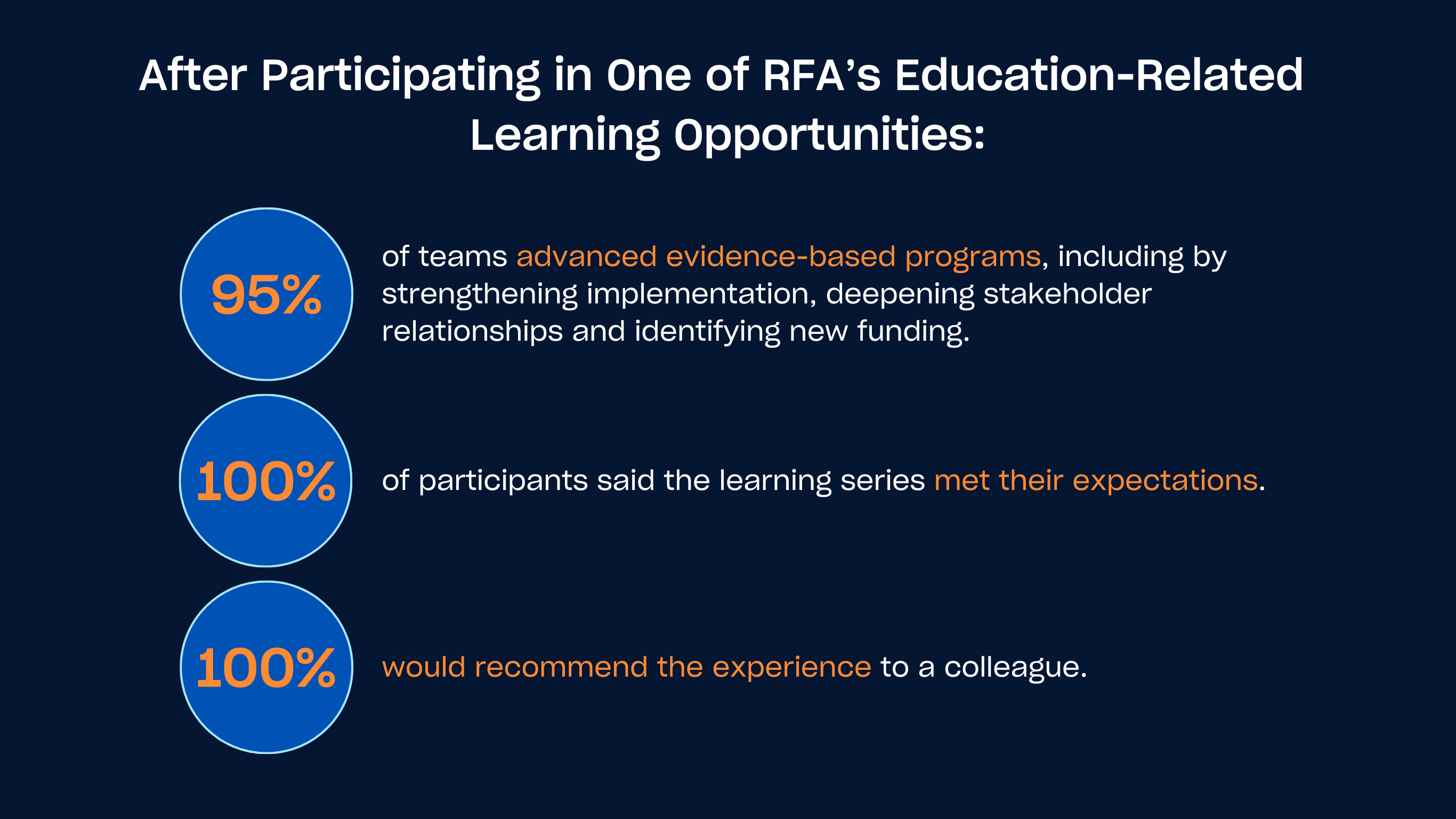
Offered in partnership with The Learning Agenda and grounded in research from EdResearch for Action, this opportunity will provide selected teams with expert guidance on how to design, fund and implement evidence-based academic summer learning programs. Participants will learn from leading LEAs, nonprofits and community partners – gaining practical insights, proven strategies, and connections with peers at every stage of program development.
.
Key Dates
- Applications Due: Friday, December 12, 2025
- Sprint Kickoff: Tuesday, January 20, 2026
- Duration: Eight sessions, across eight weeks; Tuesdays from January 20 – March 10, 2026 from 2:30 – 4:00 p.m. ET
- Location: Virtual workshops, coaching and cohort discussions on Zoom. Teams will also have access to resources and discussion boards on the Results Network, RFA’s secure online collaboration platform.
Sprint Goals & Objectives
Participating teams will work through an 8-session online learning curriculum with a cohort of peers from local education agencies across the nation. By the end of the Sprint, participants will:
- Understand the eight key design principles of an effective and evidence-based academic summer learning program.
- Understand how an academic summer learning program can reduce “summer slide” – the loss of skills and knowledge students regularly experience when school is out of session for the summer – and advance student achievement goals.
- Develop an evidence-based action plan for launching or improving an academic summer learning program to meet the needs of their specific context.
- Learn how to use data to design, evaluate and improve academic summer learning programs.
- Understand how to apply the eight key design principles of academic summer learning programs to define and prioritize evidence in requests for proposals (RFP), contracts and project charters.
- Understand and be able to apply evidence-based spending strategies to increase the impact of investments in academic summer learning programs.
- Identify federal, state and local funding sources for academic summer learning programs.
- Learn from and build relationships with peers across the nation who are implementing effective academic summer learning programs.
At the end of the sprint, participants will have created an action plan that may include:
- An academic summer learning program model that reflects the evidence- based best practice and local capacity.
- A draft RFP, contract or project charter that defines and prioritizes the key design principles of an evidence-based summer learning program.
- At least one potential funding source identified to launch, expand or sustain a summer learning program.
- A data collection and evaluation plan.
- A concrete timeline and next steps for implementation.
Who Should Apply
Summer Learning That Works is designed for teams from local education agencies (LEAs) who are interested in implementing or expanding evidence-based academic summer learning in their schools and districts. The Sprint will be particularly well-designed for LEAs designing elementary and middle school level summer learning programs; however, LEAs interested in designing high-school level summer learning programs may still apply.
The strongest applications will include teams that bring together a diverse group of key stakeholders to maximize the opportunity and establish a foundation for long-term success.
Teams should include:
- At least 2 members, although 3+ are recommended
- At least one participant from a local education agency (public school districts, public charter schools, public charter networks, etc.) with oversight over the agency’s academic summer learning program
- At least one participant from a local education agency (public school districts, public charter schools, public charter networks, etc.) with the authority and support to modify the policies, practices, and content of an RFP/NOFO and/or contract to strengthen the role that evidence plays (e.g., Chief Financial Officer, Chief Budget Officer, Procurement Director, Grant Manager)
- Recommended to include team members in the following offices or titles:
- School leaders, educators, union representatives (as appropriate)
- Families, caregivers, and/or representatives from family engagement teams
- Communication leads
- School board members
- Staff members who oversee the LEA’s federal programs
- Director of Expanded Learning (or similar)
- Teaching and Learning Directors, Curriculum Leads (or similar)
- Community-based partners, advocacy organizations and/or enrichment providers
Why Summer Learning? Why Now?
Rigorous research has shown that academic summer learning programs can help prevent “summer slide,” close opportunity gaps and accelerate learning for a wide range of students. But the content and structure of the program make a difference in its effectiveness.
Summer learning programs are most effective at improving academic outcomes when they:
- Last at least five weeks and includes at least three hours of academic instruction per day.
- Pair class sizes of 15 or fewer students with certified teachers with content knowledge and grade level experience aligned to the class.
- Use high-quality instructional materials aligned with classroom content.
- Include engaging enrichment activities, taught by instructors with content expertise, alongside academics.
Go deeper: Read an EdResearch for Action brief examining the evidence for academic summer learning programs and outlining proven design principles of effective programs. Explore best practices for implementing an academic summer learning program on Results for America’s Economic Mobility Catalog.
Why now: The latest “Nation’s Report Card” confirms that most students have yet to recover from pandemic learning loss, despite historic federal investments. With widening achievement gaps and uncertainty around federal funding, state and local education agencies must ensure every dollar drives real impact for students – and summer is a prime time to do this.
Evidence-based summer learning can reduce summer slide and close opportunity gaps, yet only half of schools offered it during the summer of 2024 and only 13% of students participated in summer programs that were academically focused. Schools cite scheduling conflicts, lack of interest, transportation and funding as key barriers.
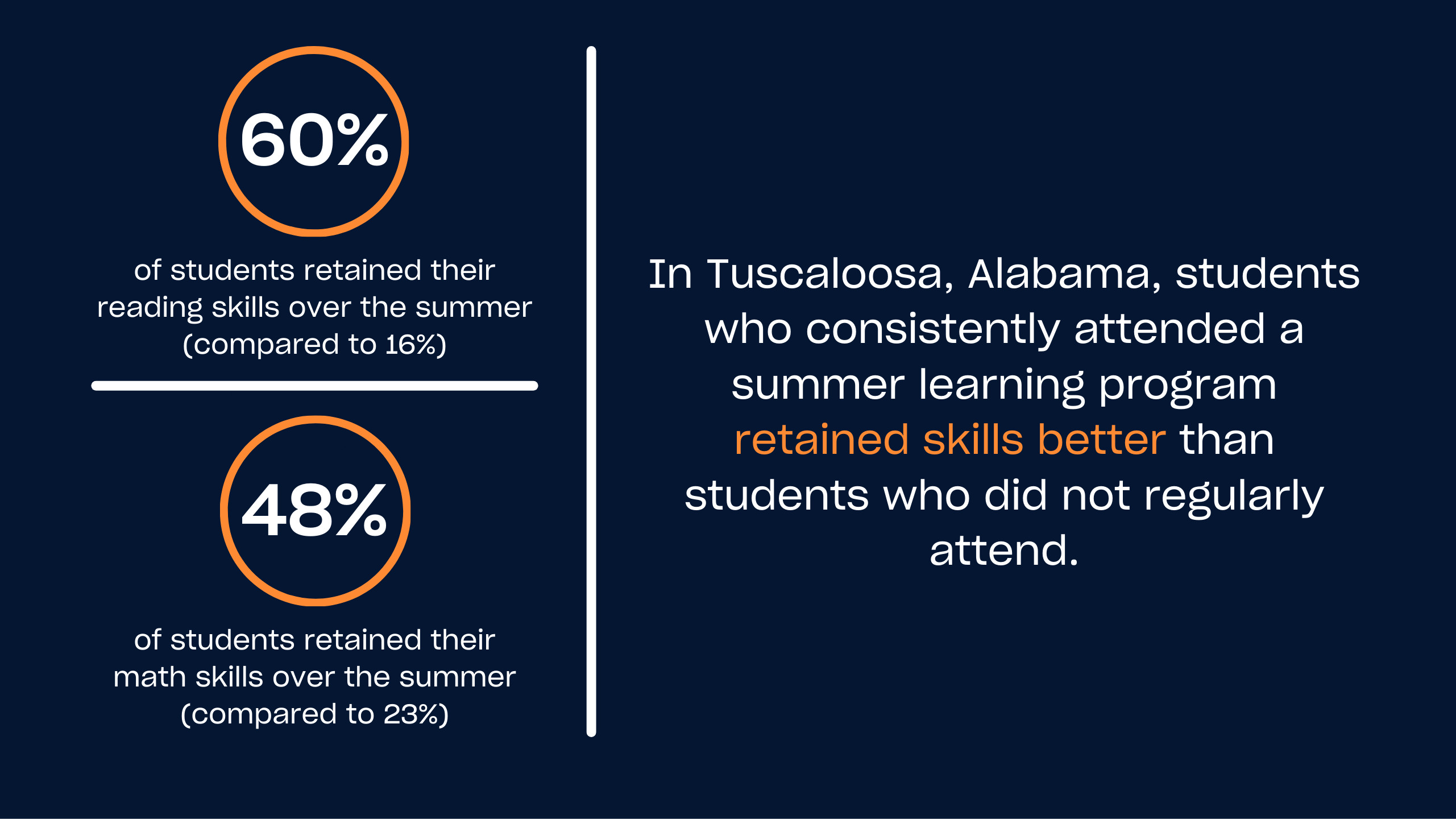
A successful model in Tuscaloosa: Read a case study of how Tuscaloosa City Schools (AL) implemented an academic summer learning program that helped protect against summer slide for 60% of their participating students in reading and 48% in math.
About the Facilitators
Weekly sessions will be designed and led by:
- Results for America (RFA), a non-profit organization that works with governments to find, fund and implement evidence-based policies and practices. Over the last several years, RFA has successfully run various Solutions Sprints, supporting over 100 jurisdictions in implementing evidence-based solutions and benchmarking their progress towards better outcomes for their communities.
- The Learning Agenda, a national team of consultants with expertise in summer and expanded learning and innovative schools and program design. The Learning Agenda is dedicated to ensuring that educators are well-equipped to lead effective systems, schools, and programs that help kids thrive in adulthood, and infuses evidence-based practices into their approach.
For Questions: Email [email protected]